
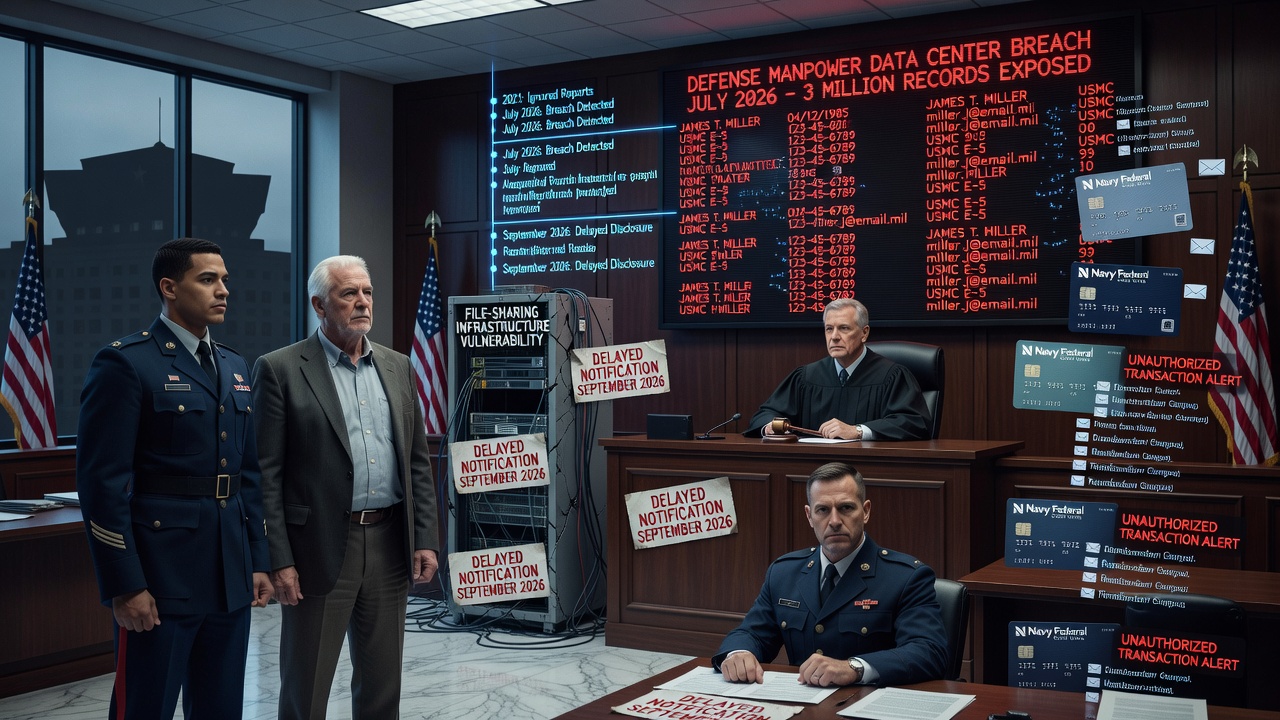
Active-duty Marine Tristyn Edwards and veteran Morgan Stampfi have sued the Department of Defense after a breach in the Defense Manpower Data Center's systems exposed personal records belonging to more than three million people connected to the US military. The lawsuit centers on a months-long gap between when the intrusion occurred and when affected individuals were told about it.
What the breach exposed
The compromised data reportedly included full names, dates of birth, Social Security numbers, contact information, military designations, and other service-related records. Investigators have linked the intrusion to a vulnerability in file-sharing infrastructure that allowed unauthorized parties to reach systems not properly segmented or monitored. Security researchers have long noted that file-sharing tools, when misconfigured, create a common entry point for attackers because they are designed to move data broadly rather than restrict it narrowly.
A disclosure timeline under scrutiny
According to the complaint, the breach took place in July 2026, but the Pentagon did not notify those affected until September - a gap the plaintiffs say violated required notification timeframes. Federal and state breach-notification rules generally expect organizations to inform victims within a defined window once an incident is confirmed, precisely because delayed notice narrows the time people have to freeze credit, change passwords, or watch for fraudulent activity. The lawsuit argues this delay compounded the harm already caused by the exposure itself.
Claims of ignored warnings
Edwards and Stampfi allege the department was warned as far back as 2021 that its cybersecurity practices were outdated and needed modernization across hardware, software, and broader infrastructure. If substantiated in court, that claim could shift the legal conversation from a single incident to a pattern of unaddressed risk, a distinction that often matters in negligence claims because it speaks to whether an organization had notice of a weakness before it was exploited.
Reported downstream misuse
The suit also cites specific instances of alleged misuse following the breach, including unauthorized attempts to open Navy Federal Credit Union debit card accounts using victims' information, and email addresses being signed up for promotional lists without consent. These details illustrate a point cybersecurity advocates frequently raise: exposed identity data does not stay static. It can circulate and be reused for fraud well after the initial breach is reported, which is why notification speed and post-breach monitoring support are often treated as central, not secondary, to an organization's obligations.
What the case could mean going forward
The outcome remains undetermined, and the Pentagon's formal response to the specific allegations has not been detailed in available reporting. Still, the case adds to a broader pattern of litigation holding both government agencies and private companies accountable not just for suffering a cyberattack, but for how they prepared beforehand and communicated afterward. For affected individuals, it underscores why monitoring credit reports and financial accounts remains a practical safeguard following any large-scale exposure of personal data.