
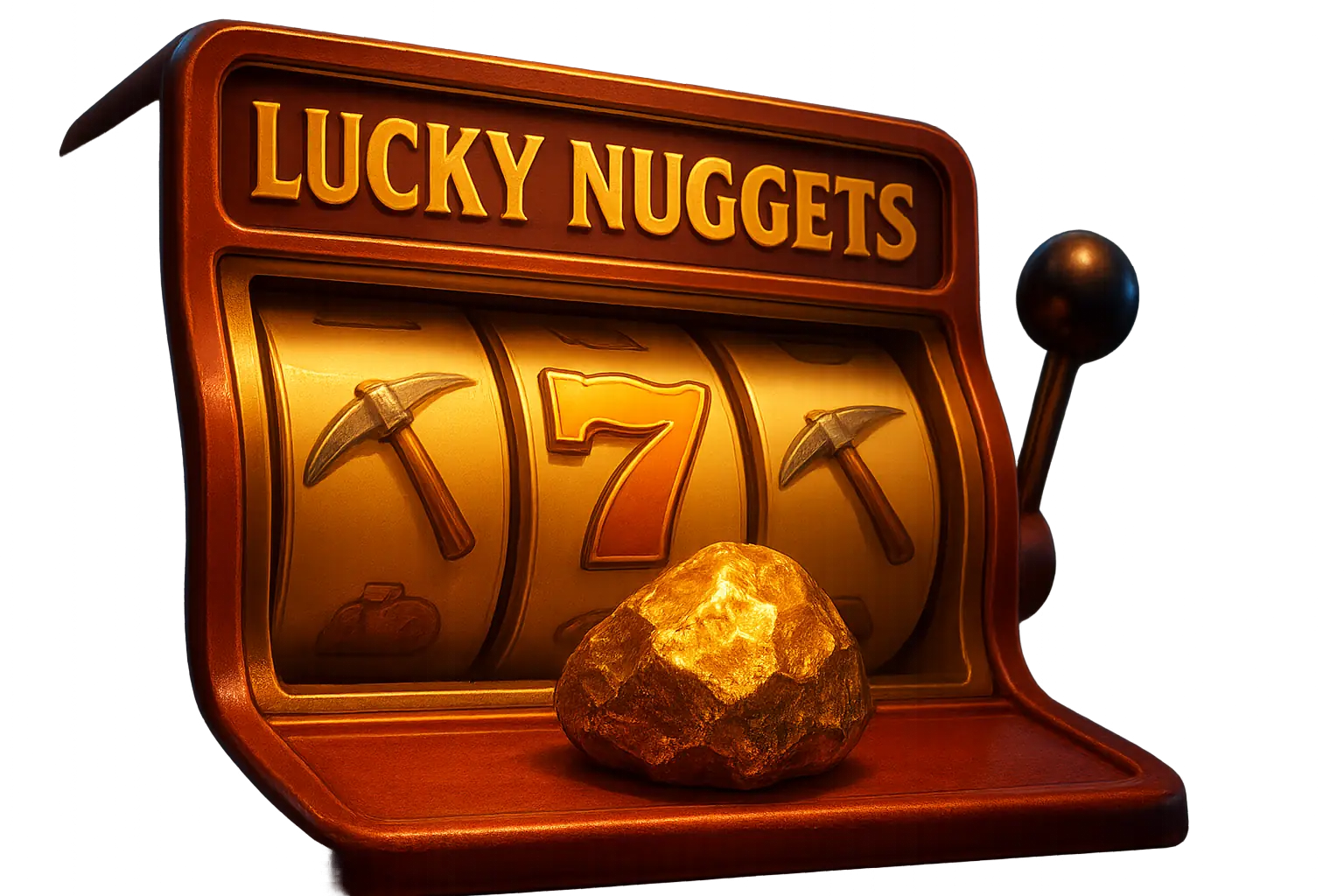
A single spin on a high-volatility machine can swing a player's balance by more than fifty times their stake in either direction - and that single fact explains why so many slot enthusiasts have abandoned flat, predictable games in favor of something riskier. The lucky nuggets slot sits comfortably in this category, built around a gold-rush theme that rewards patience with the possibility of outsized payouts. But it's far from alone. Across the current slot landscape, four mechanical categories dominate conversation among serious players: megaways slots with their shifting reel configurations, max win slots engineered for astronomical payout ceilings, high volatility slots that trade frequency for impact, and jackpot slots that dangle life-changing prize pools. Each category plays by different rules, rewards different strategies, and suits a different kind of gambler. Understanding how they overlap - and where the lucky nuggets slot fits into that picture - gives players a sharper sense of what they're actually signing up for before they commit a single coin. What follows is a practical breakdown of each format, how they're engineered, and how to choose the right one for your bankroll and temperament.
What Makes the Lucky Nuggets Slot Stand Out
Theme and Visual Design
The lucky nuggets slot leans into classic prospecting imagery - pickaxes, gold ore, weathered mining equipment, and a color palette dominated by amber and burnished metal. It's a theme that's been mined, so to speak, by dozens of developers over the years, but the execution here favors clarity over clutter. Symbols are legible at a glance, animations are brisk rather than bloated, and the pacing of each spin keeps the session moving without unnecessary padding.
Core Mechanics and Paylines
Unlike some of its more experimental cousins, the lucky nuggets slot sticks to a fixed-payline structure, which gives players a stable, predictable framework to build strategy around. This isn't a game chasing novelty through shifting reel counts. Instead, it leans on bonus triggers, scatter-driven free spins, and occasional multiplier wilds to generate excitement within a familiar shell.
Why Players Keep Returning to It
Retention in slot games usually comes down to one of two things: the promise of a big win or the comfort of a known routine. The lucky nuggets slot occupies a middle ground. Its volatility sits at a moderate level, meaning sessions rarely feel punishing, but the bonus rounds carry enough upside to keep attention sharp. For players easing into the world of high volatility slots or max win slots, it functions as a reasonable entry point - familiar enough not to overwhelm, structured enough to teach the fundamentals of bonus-triggered play.
Understanding Megaways Slots and Why They Changed the Game
The Mechanics Behind Dynamic Reels
Megaways slots operate on a licensed mechanic that alters the number of symbols on each reel with every spin, which in turn changes the total number of ways to win. Instead of a fixed 20 or 25 paylines, a single spin might offer a few thousand winning combinations, and the next might offer over a hundred thousand. This isn't cosmetic variation - it directly affects win frequency and payout distribution, making every spin feel structurally distinct from the last.
Popular Mechanics Paired With Megaways
Developers rarely ship a megaways slot on its own. Most pair the mechanic with cascading or tumbling reels, where winning symbols vanish and are replaced by new ones falling into place, often triggering chain reactions of consecutive wins from a single spin. Multiplier trails that climb with each cascade are common too, turning a modest base win into something substantial by the time the sequence ends.
Who Should Play Megaways Slots
Players who enjoy watching numbers move - win counters, multiplier values, cascading combos - tend to gravitate toward this format. It suits those who want visual complexity and a sense that each spin is doing something mechanically interesting, rather than simply landing symbols on static lines.
- Variable reel heights that change win potential on every spin
- Frequent pairing with cascading wins and climbing multipliers
- Typically higher variance than fixed-payline equivalents
Chasing Max Win Slots: The Appeal of Astronomical Payouts
How Max Win Caps Are Calculated
Every slot has a theoretical payout ceiling, expressed as a multiple of the player's stake. Standard slots might cap out at a few hundred times the bet. Max win slots are built specifically to push that ceiling into the thousands, sometimes reaching 10,000x or higher on a single spin. This isn't an accident of design - it's the entire premise the game is built around, often achieved through stacked multipliers, bonus-within-bonus structures, or escalating free spin sequences.
Real Examples of Extreme Payout Structures
Several well-known titles in this space have built reputations almost entirely around their payout ceiling rather than their theme or art style. Players often seek these games out specifically because the marketing and community discussion center on hit frequency of the maximum win, not just the game's aesthetic appeal. This has created a subculture of players who track and compare max win potential the way others track return-to-player percentages.
Realistic Expectations vs Marketing Hype
A ceiling of 20,000x the stake sounds extraordinary, and it is - but it's also vanishingly rare in practice. The mathematical model behind these games distributes most of the return across small and medium wins, with the maximum payout occurring so infrequently that most players will never see it land. Treating the advertised ceiling as a realistic session expectation, rather than a statistical outlier, is the single biggest mistake newcomers make with max win slots.
High Volatility Slots: Risk, Reward, and Patience
Defining Volatility in Practical Terms
Volatility describes how a slot distributes its wins over time. Low volatility games pay small amounts frequently, smoothing out the experience. High volatility slots do the opposite - long stretches without a win, punctuated by payouts large enough to offset the dry spells and then some. The lucky nuggets slot, by comparison, sits closer to the middle, which is partly why it works as a bridge game for players testing the waters of riskier formats.
Bankroll Management for High-Risk Play
Playing high volatility slots without a clear bankroll plan is a fast way to burn through a budget before the big win ever materializes. Experienced players typically allocate a larger total bankroll relative to bet size specifically because of the extended variance, and they set strict loss limits before a session begins rather than adjusting them mid-play.
Signs a Slot Is High Volatility Before You Play
Game information panels and provider websites usually disclose volatility ratings directly, but there are tells even without that data. Smaller bonus frequency, larger advertised max win figures, and sparse base-game payouts in demo play are all indicators worth watching for.
- Infrequent but substantial payouts rather than steady small wins
- Higher risk of extended losing streaks during base gameplay
- Bonus rounds that carry disproportionate weight in overall return
Jackpot Slots: Chasing the Life-Changing Win
Fixed Jackpots vs Progressive Jackpots
Jackpot slots fall into two broad camps. Fixed jackpots offer a set prize amount that doesn't change regardless of how many people are playing. Progressive jackpots, by contrast, grow with every wager placed across a connected network of games, sometimes across multiple casinos simultaneously, until someone hits the triggering combination and resets the pool.
How Network Jackpots Grow Across Platforms
Progressive networks pool a small percentage of every bet into a shared prize fund. Because the contributing player base can span numerous sites and jurisdictions, these jackpots can swell to figures far beyond what any single game's base paytable could support, which is exactly why they attract disproportionate attention even among players who rarely gamble on slots otherwise.
Balancing Jackpot Odds With Entertainment Value
The odds of hitting a major progressive jackpot are long - long enough that most players should treat the pursuit as entertainment with a lottery-style payout structure, not a viable income strategy. Jackpot slots tend to have lower baseline return percentages precisely because a portion of every wager feeds the growing prize pool rather than the immediate payout table.
How to Choose the Right Slot Type for Your Playing Style
Matching Game Type to Risk Tolerance
Players who dislike long dry spells should lean toward moderate volatility titles like the lucky nuggets slot rather than diving straight into high volatility slots or max win slots, where patience is non-negotiable. Those comfortable with risk and drawn to big-number potential will find more satisfaction chasing max win slots or network jackpot slots.
Session Length and Budget Considerations
Shorter sessions with tighter budgets pair better with lower-variance games, since the math simply needs more spins to even out in high-variance formats. A player with a limited bankroll chasing a progressive jackpot slot is working against the odds twice over - once through the base variance, and again through the sheer scale of the jackpot pool.
Combining Formats for a Balanced Session
Many experienced players rotate between formats within a single session - starting with something steadier like the lucky nuggets slot to build a cushion, then shifting a portion of winnings into a higher-variance megaways slot or jackpot title. This approach doesn't change the underlying math, but it does manage emotional fatigue better than committing an entire session to one extreme or the other.
Frequently Asked Questions
Is the lucky nuggets slot suitable for beginners?
Yes. Its moderate volatility and fixed-payline structure make it easier to understand than megaways or max win formats, giving new players a stable introduction to bonus mechanics without extreme swings in balance.
What's the real difference between megaways slots and standard video slots?
Standard slots use a fixed number of paylines on every spin, while megaways slots vary the symbols per reel each round, changing the total number of ways to win dynamically. This creates more variable, often higher-ceiling payout potential compared to fixed structures.
Do max win slots pay out their advertised maximum often?
No. The advertised maximum is a statistical ceiling, not an average outcome, and it occurs extremely rarely across the total spin population. Most returns in these games come from smaller and mid-range wins rather than the headline figure used in marketing.
How much bankroll should I set aside for high volatility slots?
A common approach is allocating a bankroll large enough to withstand fifty to one hundred base bets without triggering a bonus, since dry spells are a built-in feature rather than bad luck. Setting a firm stop-loss before playing prevents chasing losses during extended downswings.
Are progressive jackpot slots worth playing regularly?
They're best approached as occasional entertainment rather than a regular strategy, since the odds of hitting a major progressive jackpot are extremely long and the base return percentage is typically lower than non-jackpot equivalents. Treating them like a lottery ticket rather than a reliable source of winnings keeps expectations realistic.
Can I switch between game types within the same budget?
Yes, and many experienced players do exactly that, using steadier games to build a buffer before shifting into higher-variance titles. This doesn't alter the underlying odds of any individual game, but it can make a session feel more controlled and less emotionally draining.